A SWOC analysis will be most helpful if you use it to support the vision, mission, and objectives you have already defined. The SWOC will at least provide perspective, and at best will reveal connections and areas for action. Source: thinkmarketingmagazine.com
When used well, mind maps can easily be a great aid to understanding-- such as, in highlighting interconnections and patterns that would probably not have emerged from a linear approach. They can also work in presenting a more coherent picture to become presented to except for conventional notes would afford. They can also be included in at a later date as circumstances change or our thoughts and understanding develop.
Some people require to mind maps instantly and quickly become quite proficient utilized them. Others may struggle originally to produce a useful mind map because they are so used to adopting the linear approach to note taking. For this latter group, there is much to become gained from being persistent. The skills could be developed with practice and can, eventually, be required to quite a high level of competence, if certainly not actual expertise. Mind maps may be very useful for getting a feeling of structure and control in connection with the topic in hand. Additionally, its visual nature means that their contents are more probable to become recalled at any future point. So, there are numerous benefits to using this tool. So, when it involves making notes, there is no tightness of practices that are not very helpful and thus do not serve us well. Yet, it is also fair to say that there are constraints to traditional note-taking practices, even when well used. This is because, by their very nature, traditional notes are 'linear'-- that is, they follow a direct structure from point one to point two and so forth. But life isn't linear, and nor is the way our minds operate. What can, therefore, be helpful is s process of note taking that more fully matches our thinking processes. This is where 'mind maps' appeared in.
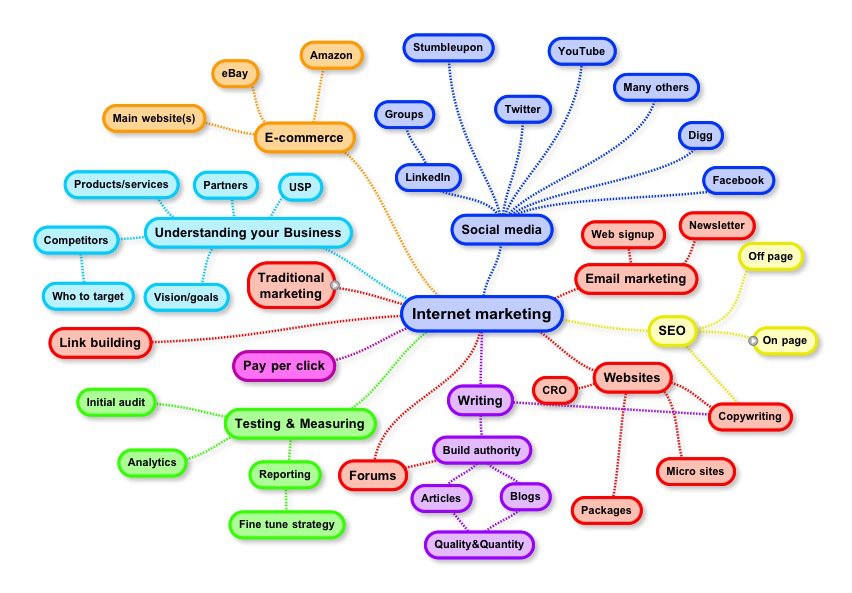
A mind map is built by putting the topic concerned (whatever it is you intend to make notes about) in a surround the center of the page. From this central focus, you can have other boxes (or lines) that radiate from it with subtopics, problems or impressions that associate with the central focus. Apiece of these secondary boxes or lines, you can establish further subtopics, issues or whatever. This allows the note taker to explore different opportunities, separate lines of thought while considering the topic. This makes the notes multidimensional, and this allows us to become more creative in our thought and more alternative (by giving us an overview of a topic or subject). The example below gives a sense of what is involved. This was produced using mind mapping software, and there are various software application options available, ranging from free to expensive (relying on the additional facilities obtainable within the package concerned). However, software is not needed, as perfectly good mind maps may be produced with pen and paper. Altogether, then, mind maps offer very real capacity for a significant and successful approach to relevant information repository to inform our thinkings, knowledge, and decision. There are many moments when it does, or even essential, to have a register of our ideas and/or the activities to which they relate. Some people seem never to create notes; they simply depend on their memory, which, surely, is not a wise strategy, as it involves committing chance what is recalled and what is not. Other individuals, I'm aware, make massive notes, but never consult them again-- they just file them away as though having them somewhere to hand will be useful. Yet others have no submitting system, so their possibilities of finding any notes they may have taken are comparatively slim anyway. Source: www.socialjusticesolutions.org
An important aspect of any learning is memory. Without it all our learning will be futile. While some are rendered with razor sharp memory, there are others, who find their memory failing them at the most crucial moments in their life. As in everything else, memory can be improved a great deal by applying some of the memory techniques. In any new learning, you can understand new information easily by associating the new information with your acquired learning. This will help you to see the relational aspects of certain principles, mechanism, truth or whatever, and lend greater meaning and significance to the information learnt. Studies have revealed that memory is enhanced by using both sides of your brain. This is known as whole-brain thinking. The left side of our brain controls in logic, words, lists, numbers, sequences and analysis, while the right side excels in rhythm, imagination, daydreaming, color, size and spatial awareness. Working on combining the left and right attributes will strengthen memory. Many problems of memory are primarily due to lack of proper attention. You can visualize what you want to remember by picturing them as a sequence; the more bizarre, humorous and exaggerated the images, greater the recall. You can link the main ideas or items of details by stringing them into an unusual story. E.g. if you have to buy vegetables, pick up laundry and buy toys, you could link them into a story: Tomato quashes on your shirt, you have to go to the laundry for cleaning when Mickey Mouse welcomes you. Using acronyms is an effective way for remembering items in an order by making a word out of each item to be recalled. E.g. My Very Elegant Mother Just Served Us Nine Peas-- represent 9 planets of the sun - Mercury, Venus, Earth, Mars, Jupiter, Saturn, Uranus, Neptune and Pluto. When the first letter of each item stands for a word in a phrase it is known as Acrostic. E.g. Pink = Pink is a special color; I like it more for its subtle shade, Never loud or garish; Kind of gentle and pleasing always. Chunking is another effective technique applied often in numbers. For e.g. If you have to remember 10 digit telephone numbers, you can split them into units of 5-- 98412-84523. You can also chunk items under a general concept-- Fruits, Vegetables, etc While these are some of the common techniques for enhancing your memory, an equally powerful and easy technique for reinforcing learning and memory is the Mind Mapping. The Mind Mapping technique is primarily based on how we think, remember and recall. British Psychologist, Mr. Tony Buzan, developed the technique based on the theories of memory. His studies on memory and the brain, led him to invent the Mind Map technique. The intrinsic worth of this technique is that it induces whole-brain thinking by triggering a chain of associated thoughts and ideas, and stimulating the full resources of the brain. Since you note down your thoughts on a subject or issue, you will be engaging your full and focused attention to it. In addition, the technique employs visual stimuli such as colors, pictures, symbols, dimensions, etc., adding to the vividness, and greatly strengthening memory and dissemination. The Mind Map technique is primarily aimed at enhancing your memory vastly, and giving full rein to your inner thoughts and process. It thus has the potential to trigger greater creativity, imagination and insight. It is indeed a great memory grosser!! You have to learn and use the technique and then you will know how your memory never lets you down. Source: ArticleCity
New software that is free for students to download has produced its way to the UA and will help make documents and files easily accessible. Read and Write Gold provides various tools to guide undergraduate and graduate students with their reading and writing materials. The software has text-to-speech abilities, voice recognition and can also be used as a research aid for students with disabilities or for those learning a second language. Dawn Hunziker, the information technology accessibility consultant for the Disability Resource Center, received a grant for the UA to introduce the software. "She mentioned it at a meeting and then I received an email from one of her listservs. I looked more into it and found that it's very useful for anyone who is learning," said Leslie Dupont, coordinator of the graduate writing program for the Writing Skills Improvement Program. "Read and Write Gold will definitely help with students who have accessibility issues.". Dupont mentioned she uses the software mostly with her multilingual students who are learning English as a second language. She said it's a great way for them to learn proper accent and the images provided next to the text aid in learning. She said it helps them while reading because it organizes the text in such a way that they aren't overwhelmed by it. Mary Beth Foster, educational technology coordinator for the SALT Center, said Read and Write Gold features a lot of tools students can use. For example, students have the option to choose from four different colored highlighters that color code their textbook readings and then collect the highlights and put them on a separate Microsoft Word document or PDF file. "This is super convenient for students who want to make outlines or study guides," Foster said. "The majority of students are visual learners, so Read and Write Gold has a tool for that too.".
A tool within the program, called Fact Mapper, acts like a mind-mapping tool that creates bubbles for individual ideas the user has. If a student is using this tool as a tree diagram, they can create one large bubble as the main subject and then multiple sub-bubbles for key words or ideas. Once the student is done, the software converts his or her notes into an outline to visually organize the student's thoughts. "Read and Write Gold has two main options, text to speech and speech to text," Foster said. "Text to speech is programmed so that the computer will read to you. The voices are updated so they don't sound robotic but now they sound sophisticated and more human-sounding. It also highlights the words while it's reading and allows students to adjust the speed for slow and fast readers.". Foster said tracking the speed will allow students to be more focused, and if they want to hear it on the go, they can download the reading file as an MP3 file. She said if students are working out at the gym but have to read assignments or textbook pages, the software allows them to listen to their readings on their smartphones.
"It works on a PC where the computer goes into a training mode that you are able to speak into the computer and it does as you command," Fpster said. "It recognizes your speech patterns so it can mimic your voice and talk out ideas while typing at the same time.". Students can also train the computer by reading passages while the computer listens and captures the pronunciations. Foster said she created tutorial videos on how to use the resources. She encourages students to install the software. The SALT Center will work with students one-on-one to make sure they are getting the experiences they deserve. Source: Wilcat.Arizona.edu
Read more to discover 5 HUGE advantages mind mapping software offers you or your business!
Mind maps are one of the best productivity tools you can use to help you record and categorize any thoughts you have that may prove useful to you in the future! Now how many of you have had ideas which seemed great at the time but went unrecorded and therefore were rendered useless! Mind mapping allows you to capture any relevant or interesting thoughts, ideas or concerns in a somewhat organized trend! The best part is how this software helps you literally visualize your ideas and pull them combined in a way they will prove most useful to you! Let's now take the time to further examine 5 HUGE advantages mind mapping software offers you or your business! Capture Mind mapping software allows you to immediately capture and even categorize any thoughts or ideas you may have before they're forgotten! Simply taking note of what is on your mind is NOT as effective because hand written notes tend to be haphazard, unrelated and disorganized! When you come back to review what you've recorded by hand later on, making sense of what you're viewing will than be more challenging! Visualize Nothing (of significance) happens UNTIL it can be first gotten the picture and software used for mapping out and organizing random thoughts helps you do so! Productivity tools like this that help you 'capitalize' on your own creativity or ingenuity allow you to format or layout any thoughts in a useful way that make sense! Much like a puzzle, your captured thoughts are 'pieces' that you can rearrange in any way you please to perform your purpose best! Expand Being able to view your ideas in various (visual) formats helps to further promote your own creative thinking thus allowing you to expand on your idea! It's all about focusing on the problem, opportunity or need and when you do so, new answers or applications tend to 'flood' into your mind! In short having the capability to visualize something helps you focus more on the particular matter or issue! Polish Capturing 'fleeting' ideas you can put to use later on is a dominant benefit of mind mapping software! One huge advantage here is you can go back and refine any thoughts you've recorded to make them better adapt to your current needs! By virtue of the fact that you are able to format or arrange any recorded ideas in a particular manner makes it easier to pick up on what you were previously thinking without much effort! The result is less time is wasted when trying to resuscitate your previous 'brainstorming' session thus making this type software one of the best productivity tools you can use! Saving time while maximizing your own creative thinking abilities is definitely being productive, don't you think? Put to Use The intention of the software discussed here today is to catch, sort and organize your ideas so they can be put to constructive use! Much like keeping windows and doors shut so as NOT to allow heat or cooler temperatures to escape, mind mapping does much the same with your thoughts and ideas! Even if what you record may not be of particular relevance at the time, there is likely an application for it sometime in your future!
Mind maps are one of the best productivity tools you can use to harness your thoughts and creativity in a way that you can actually put to use! For marketers who work online mind mapping software is an excellent way to capture otherwise short lived thoughts and/or ideas that can be further developed for future use! Even though the 5 benefits reviewed above are all of considerable importance to any entrepreneur, your imagination is the only limitation to how many uses you can find for such a tool! Based on ArticlesFactory.com
Malmö, Sweden (March, 2016)-- Seavus and Adobe worked on integrating Adobe's image editor within iMindQ's online mind mapping app, and announce the latest release of iMindQ Online 4.0, the first mind mapping tool with Adobe's Creative Cloud Connected image editor The application also supplies new Research tab, social media sharing of interactive HTML mind maps and On-Screen Tutorials. Built-in Adobe Creative Cloud Connected image editor. iMindQ Online is the first to offer an image editor from Adobe's Creative Cloud Connected, which offers flexibility in customization and editing of graphics that are inserted within mind maps. Users can discover their creativity by being able to utilize filters, add stickers, manipulate with color, crop, rotate and use many other tools to edit and customize the images within the Creative Cloud image editor. The mind maps can also be exported as editable images, and users can use the Creative Cloud editor to edit the mind map screenshots beyond their creation. Research tab for image search by keyword. With iMindQ Online, users will be able to boost their mind maps by inserting images from the new Research tab, which provides image search by keyword from Flickr and Open Clipart. This provides users to be able to easily pick out images aligning with the context of their ideas and insert them within the topics or subtopics of their mind maps Social Sharing of HTML mind maps. The latest release of iMindQ Online offers an option to straight share interactive HTML mind maps via the social media networks Twitter and LinkedIn. The interactive HTML mind map can be opened inside any browser, edited and saved again from the browser. This feature enables users to build upon ideas and share their knowledge with connections that do not have the native program.
Interactive On-Screen Tutorial For all new users to iMindQ Online, there is now an Interactive On-screen tutorial, which offers a fast and easy introduction to using the program and the mind mapping technique. Marjan Mansournia, Business Development Manager expresses: "With the launch of the newest release of iMindQ Online we have followed the needs of our users, and have steered the app to complement the desktop version of the software, but at the same time provide exciting and innovative features for users to easily generate and share ideas. The demand for mind mapping apps that enable users to create mind maps on any device is increasing, and iMindQ Online delivers just that and more, giving users the unique chance to enjoy an interactive way to present, share and collaborate on ideas, through interactive HTML mind maps.". The free demo of iMindQ Online is available on the following link: app.imindq.com To learn more about iMindQ Online, visit: www.imindq.com/mind-mapping-online
The idea of mind map has developed to facilitate and organize concepts and ideas that generally could take longer time to understand. The traditional way of thinking hampers creative thinking and hence the idea of mind maps came into prominence. What happens in mind maps is that there is a central idea or concept around which a pattern or framework is built and that becomes instinctive for the individual. In the business of marketing the use of these mind map software is undisputable, and one can use the software to better outline the marketing strategies with their available resources. The individuals for whom the visualizations are created with the help of the mind map software can easily understand the interrelations between different ideas and concepts.
Some freeware mind map software are web based and enables the users to collaborate and have their mind maps on the internet and the users need to have flash on their system to have this functionality. Another freeware mind map software lets the user to draw colorful concept maps and mind maps with good visualization and also have automatic topics' layout functionality. Different free mind map software come with their own functionality, users can have other functionalities in these mind map software such as exports, free-float texts and images, color and fonts, rich text notes, task information, outline exports and much more. Some mind map software are open source that enable users to draw mind map diagrams while others are free mind map software. Some freeware mind map software are web based and enables the users to collaborate and have their mind maps on the internet and the users need to have flash on their system to have this functionality. Another freeware mind map software lets the user to draw colorful concept maps and mind maps with good visualization and also have automatic topics' layout functionality. Different free mind map software come with their own functionality, users can have other functionalities in these mind map software such as exports, free-float texts and images, color and fonts, rich text notes, task information, outline exports and much more. Some mind map software are open source that enable users to draw mind map diagrams while others are free mind map software. The open source mind map software support platforms like Linux, UNIX, Windows, Mac OS, while others are cross platform software. The proprietary mind map software has additional functionality as compared with the open source and free software that has limited functionality.
Mindjet, the global leader in mind mapping software and SaaS solutions for enterprise innovation, has been voted the #1 User's Choice for mind mapping software in Biggerplate's 2015 Global Mind Map Survey. This marks the second year running that Mindjet has earned this endorsement from the Biggerplate mind mapping community. With over 85,000 members globally, Biggerplate advocates mind mapping software as the missing link and must-have tool for modern workers. This survey solicits feedback from mind mappers worldwide, unearthing a wealth of information about the current state of mind mapping, understanding who is using mind maps, what they're able to accomplish, and what benefits they get from using a visual approach for organizing ideas, information, and projects. Results demonstrated that participants primarily use mapping software for project management, brainstorming, and research in several industries, typically at the management level or higher. "Last year was an exciting one for MindManager, with the release of MindManager Enterprise and MindManager 15 for Windows," said Felicity Wohltman, VP of Product Marketing at Mindjet. "The new features in these releases were developed as a direct result of feedback from our dedicated community of users, and we're very pleased to be recognized by the Biggerplate membership." Liam Hughes, founder of Biggerplate, offered his insights. "Mindjet continues to set the pace in the eyes of the mind mapping community," said Hughes. "This year is going to be a big one for mind mapping software." You can download the full report at Biggerplate.com.
Project planning with associated management may be arduous, particularly considering all the various parts involved: planning, timelines, collaboration, assignment tasks, managing information, and making content. However, managing info overload and multitasking square measure necessary aspects of making project coming up with and execution. Sadly, this can be additionally wherever mistakes or inaccuracy can very value you.
Mind mapping, particularly once managing multiple comes, is associate exceptional, straight forward thanks to contour the method. Outwardly, mind maps typically appear difficult and inconvenient, however, once you start mistreating them systematically, they'll really prevent plenty of time and build multitasking and collaboration easier. New technology and cloud-based services have created mind maps shareable and simply editable, that permits groups to capture and organize info and ideas a lot of quickly than via ancient means that. Here square measure a number of ways in which you'll use mind mapping to alter project coming up with and data overload. Scope and description At the design and beginning stage, you wish to stipulate the scope of what you're doing. Most of the time, the data is hold on and conferred during a linear format, with extended disorder lists and enormous documents representing every arm of the project. The matter with disorder lists — and most lists normally — is that though they assist organize tasks, they need some way of obtaining team members to fixate on the microscopic details after they ought to be staring at the larger image. Obtaining stuck within the details within the beginning section will cause you to lose sight of the most objectives, and forestall you from setting unjust goals. With mind maps, you'll break the project into easy-to-manage chunks, such as:
Typically, after you don't need to forget one thing, you're taking a note of it. After you hear a lecture in class or during a seminar, you naturally take down notes. It's a straightforward resolution to memory lapses, and typically an efficient one to assist you bear in mind vital details you will get to see later. But each thus, usually, you relive at your notes and spot, however undone they're. You've got a page when page of data however you've got no clear plan of however everything fits along. You cannot realize a affiliation among them. If you have ever encountered such a retardant, you will be glad to understand that there is an answer to the chaos: mind mapping. Mind mapping may be a graphical thanks to represent your concepts and ideas. It's a comparatively new technique that visually offers structure to your info to assist you higher analyze, understand, bear in mind and make new concepts. Mind mapping, compared to ancient note-taking, follows a structure that's additional just like however your brain works. It's associate degree activity that's each inventive and analytical, and it greatly improves your means of thinking and approaching things. By mistreatment mind maps, you'll be able to simply determine and comprehend the structure of a theme. You start to envision, however items of data work along. Except for this, mind maps build it easier to recollect info as a result of its keep during a format that's easier for the mind to review and recall.
Mind mapping is a plan popularized by author and advisor, Tony Buzan. It uses an easy two-dimensional structure rather than the same old list format that folks usually use in taking down notes. In alternative words, it simplifies note-taking. This makes mind maps additional compact than ancient notes, usually seizing only 1 aspect of a bit of paper. Then again, if writing on paper turns you off, you'll be able to use a mind mapping package. A mind mapping package permits you to know mind mapping while not the requirement to attend overpriced seminars or bury your nose in heaps of books. With the package version you'll be able to simply produce diagrams and build connections between ideas and alternative info. There are trial versions you'll be able to transfer from the web that show, however useful mind mapping will be for you. Related articles
Web: Evernote is a brilliant app if you use it right, but the more you put into your notebooks, the more overwhelming it can get. We've talked about the benefits of mind-mapping, so if you like that, Mohiomap takes all your Evernote data and turns it into a visual map for easy navigation. Check this great tool at Mohiomap Source: LifeHacker.com
Those wanting help in navigating complex ideas often turn to mind mapping software, and Scapple is one of the best on the market. The Mac app brings structure to concepts, but in a user-friendly, drag-and-drop way. The economical design and quick import options also make sure nothing gets between users and their ideas. Scapple isn't a spelling mistake for that Pennsylvania Dutch concoction made with pork scraps, corn meal, flour and spices. In fact, scapple is actually a word meaning to work roughly, or shape without finishing. It's also the name of a dynamite new mind mapping program from Literature and Latte, the folks who brought the Mac world Scrivner. Mind mapping isn't exactly a new category of software and the folks at L&L aren't me-too types, so you know they wouldn't try their hand at this kind of software if they didn't think they could add value to it. That they did. Scapple is not only easy and fun to use, but it's one of best mind mapping programs for creatives in the market. Blank Canvas for Ideas Mind mapping is based on the idea that we think visually, not in outlines. When we attack a project, we have ideas swirling around in our heads and can best make the connections to those ideas in a free-form way -- no Roman numerals, letters and numbers. While mind mapping programs can give you the free-form freedom you're looking for with ideas, they do force you to connect your ideas -- maybe before you are ready to do that. For example, when you write down one idea, the program will typically automatically connect it to the next idea you write, unless you manually intervene. Scapple doesn't even make those kinds of minimal impositions on your thought processes. It gives you a true blank canvas for your ideas. Making Connections You can type an idea anywhere on that canvas by moving your cursor to wherever you want the idea to appear and double-clicking the spot. Alternatively, you can use the command-control keys to start a new idea. As you start populating the Scapple canvas with ideas, you might want to move some ideas close to others. All you need to do is click and drag the idea to its new location. Now you may notice how some ideas relate to others. You want to connect those ideas. No problem. Click one of the ideas you want to connect and drag it to the other idea. The "dragged" idea will bounce back to its original location and a dotted line showing the connection between ideas will appear on the screen. You can reposition either idea, and the bond between them will stretch and shrink to accommodate the changes. Don't like the connection anymore? Just drag one idea onto the other and the link will be broken. Don't like the ideas either? Click on them and tap delete.
Using Arrows to Target Ideas Dotted lines are OK, but a mind map isn't a mind map without arrows. Scapple lets you link ideas with arrows on the fly. To create an arrow from an idea you've dragged to another idea, hold down the option key as you drag and drop the idea. An arrow in the other direction can be created by holding both the option and command keys while dragging and dropping ideas. Two-way arrows can be created by holding down the shift and command keys during a drag and drop. If you see two ideas connected by a link, and suddenly you realize that there should be another idea between the pair, you can double-click on the link and a box will pop up, allowing you to insert the idea between the other two. Stacking Ideas While a mind map's horizontal dimensions are its strong suit, sometimes the vertical relationship of a series of ideas can be too obvious to ignore. Scapple lets you group those ideas in "stacks." For example, let's say you have an idea that you'd like to connect with several URLs. You could connect everything together with dotted lines or arrows, but a stack might be more useful. You could create your idea, select it and then hit command-enter. A new box will appear immediately below the idea. You can paste your first URL in that box, select it, hit command- enter again to create the next item in the stack, and so on until the stack is finished. By the way, URLs in Scapple are live, and clicking on them will take you to their location on the Internet. When you're creating ideas on the fly, you might not see what makes a good stack of ideas. That's not a problem. You can select the ideas you want to stack by using shift- or command-click and choose "stack" from Scapple's menu bar. All the ideas will be neatly stacked under the first idea you selected. Shining Star In addition to associating ideas by stacking, you can also place borders around them. That will make them stand out on the page. You can also lock the ideas inside the border you draw around them by choosing "magnetic" from the Notes pulldown menu. Locking ideas in the shape allows you to move both the shape and ideas around as a single unit. Scapple not only accepts keyboard input, but you can also drag pictures and document files into it. Read complete at: MacNewsWorld.com
MindMaple Inc. has released v1.61 of their mind mapping software, MindMaple. Developed with students and teachers in mind, this version seeks to bridge the gap between instructor and student, and overcome the restrictions of group work. MindMaple v1.61 includes improved formatting, export options and increased style options. The cloud-based collaborative function is arguably the most notable feature added to this update. This feature allows users to upload, save, and launch mind maps or information maps, to their Google Drive. The cloud-based functionality allows the publisher and collaborator to utilize and edit the mind map from any location equipped with an Internet connection. Instructors can upload syllabi, lecture outlines and such, online for students to readily access. Students can upload organized lecture notes or brainstorm group assignments without having to hover over one computer screen. MindMaple’s collaborative feature seeks to improve the process of group work and content creation. Another useful feature for educators and students alike are the added template and theme maps. Templates, such as lesson plans, and themes, like Blackboard, offer recommendations on how the software can be utilized in the classroom. The sample maps can be altered to fit the needs of the user or used as a source of inspiration. Read more: sfgate.com
BETA COGGLE aims to set itself apart from other mindmapping tools with an ultra-clean interface and user experience. Controls are a cinch -- add an unlimited number of parent/child nodes with a simple mouse click, or delete nodes by holding the 'Ctrl' key down first. Colors, grouping, and spacing are updated auto-magically to ensure the map is always easy to read and trace. You can optionally share mindmaps Google Drive-style, giving collaborators read/write privileges, or review the mindmap creation process with a handy timeline slider. Coggle is a simple, beautiful, powerful way of structuring information. It's designed to help you understand things, and then share your knowledge by arranging your document in the same way that your mind works. This way of working is called mind-mapping, and is a very powerful way of learning, storing and sharing information.
Coggle supports: * Real-time Collaboration * Markdown formatting * LaTeX syntax for the inclusion of math expressions (use LaTeX via the \\( \\\) or \\[ \\] escape sequences) * Downloaded as vector PDF or as PNG Other software is ugly, complicated, difficult to use, and often extremely expensive: Coggle is free, simple, beautiful, and it always will be. Coggle is aiming to provide a new tool to the people stuck in the world of conventional documents, lists and spreadsheets, not just to convert the people who already love mind-mapping. Everyone from business teams sharing information on a project, through students and teachers, to individuals organising their own lives. Source: edsurge.com
Mind maps are fundamentally very simple. You can create one on the back of a napkin in mere seconds, so it follows that there should be an equally effortless way to do it online. And there is: MindMup, a free and lightweight service lets you throw together simple mindmaps without having to download anything, open an account, or do anything else. It's Web-based, too, so it works across Windows, Mac OS X, and Linux. When you go to MindMup.com, you first see a default map explaining how the service works. It goes over keyboard and mouse use, and includes notes on how open and frictionless the service is. And for once, it's no hyperbole: MindMup requires no registration to work, not even when you save your mind map. And if you're afraid of saving your work to the service, you can easily connect it with your Google Drive, or even save to the local browser storage using HTML5.
MindMup is JavaScript-based, so you don't need to have Flash installed to use it.The service works best for simple mind maps. You can nest nodes, change their color, expand or collapse them, and move them around using the mouse. Motion is accompanied by pleasingly smooth, bouncy animations. Read complete at: pcworld.com


 , developed the technique based on the theories of memory. His studies on memory and the brain, led him to invent the Mind Map technique.